The Virtue of Dullness: How Cold War Spies Hid in Plain Sight Behind Perfectly Boring Lives
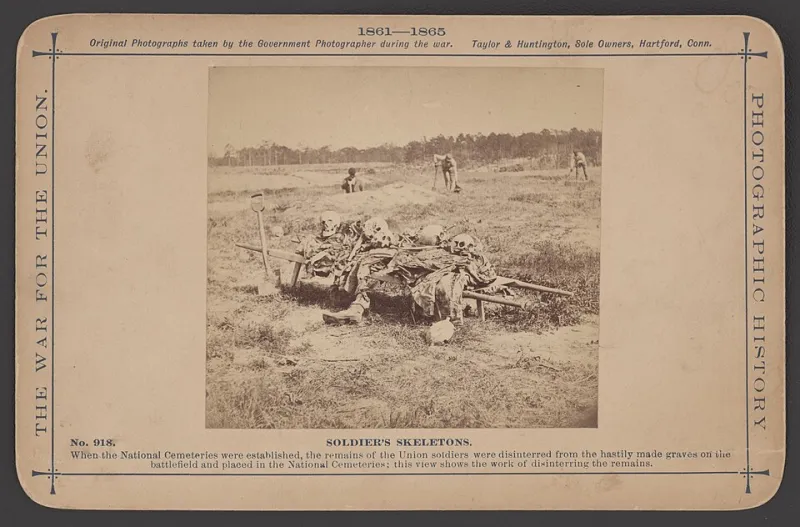
Photo: Reekie, John, photographer; Taylor & Huntington, publisher, Public domain, via Wikimedia Commons
There is a persistent fantasy, cultivated by decades of cinema and paperback fiction, that the successful spy is a creature of elegance. He orders his drinks with precision. She moves through embassy receptions with the fluid confidence of someone who belongs everywhere and nowhere. The cover story, in this imagining, is a feat of sophisticated invention — a carefully assembled identity demanding constant performance.
The historical record disagrees, rather emphatically.
Declassified case files, memoirs from former intelligence officials, and the slow accumulation of Freedom of Information Act disclosures over the past three decades paint a strikingly different portrait. The operatives who lasted longest, who compromised the most sensitive material and evaded detection for years or even decades, were not distinguished by their sophistication. They were distinguished by their extraordinary ordinariness. Their cover stories did not dazzle. They bored. And that, as any experienced case officer will confirm, was precisely the point.
The Operational Logic of Unremarkability
To understand why mundane hobbies became such effective instruments of concealment, one must first appreciate the fundamental challenge facing any intelligence operative working in a denied environment — that is, a location where the host government is actively hostile and surveillance is assumed.
The operative's primary vulnerability is not incompetence. It is pattern anomaly. Counterintelligence professionals are trained to identify behaviors that deviate from established norms: unexplained absences, financial irregularities, contacts that cannot be accounted for, movements that serve no visible civilian purpose. The cover story exists not merely to provide a false name or occupation, but to generate a plausible behavioral ecosystem — a complete and internally consistent life that explains, in advance, every observable action the operative might take.
This is where the amateur hobbyist holds a remarkable structural advantage. A man who has maintained a documented interest in ornithology for fifteen years has a ready explanation for early-morning excursions to remote areas, binoculars around his neck, notebooks in hand, lingering in locations that might otherwise attract scrutiny. A woman who has corresponded with fellow philatelists across international borders for a decade has a natural justification for foreign contacts, unusual mailings, and an interest in postmarks and postal routes that would otherwise appear inexplicable. The hobby does not merely provide cover for a single operation. It provides cover for an entire pattern of life.
Former CIA operations officer Lindsay Moran, in public remarks following the publication of her memoir, noted that the most durable cover identities she encountered during her training were those built on genuine, documentable civilian interests. "The problem with elaborate cover," she observed, "is that it requires maintenance. A boring truth requires almost none."
Case Studies in Cultivated Mediocrity
The annals of Cold War espionage offer several instructive examples of this principle in practice.
Ham radio operation — the hobby of amateur radio enthusiasts licensed to transmit and receive on designated frequencies — proved particularly fertile ground for intelligence exploitation on both sides of the ideological divide. The hobby was, and remains, entirely legal, widely practiced across the United States and Europe, and provides an entirely natural explanation for sophisticated radio equipment, antenna arrays, and a detailed working knowledge of transmission frequencies. Soviet intelligence services identified this vulnerability early. Several documented cases from the 1950s and 1960s involved assets who maintained active amateur radio licenses, participated in legitimate hobbyist communities, and used that established credibility to mask communications activity that had nothing to do with contacting fellow enthusiasts in Ohio or Manitoba.
Stamp collecting — philately — offered analogous advantages at a more analog level. The hobby generates a logical reason to correspond internationally, to receive packages from abroad, to visit post offices with regularity, and to maintain detailed records of postal systems across multiple countries. During the height of Cold War tensions, several courier networks operating in Western Europe used philatelic correspondence as a transport mechanism for microdot communications — a technique in which photographically reduced text is concealed within what appears to be an ordinary postage stamp or printed directly onto correspondence in locations a casual inspector would not examine.
Birdwatching merits particular attention because its operational advantages are almost comically comprehensive. It explains sustained presence in rural or semi-rural environments. It accounts for the use of optical equipment. It provides a reason to be stationary and observant in locations that might otherwise attract notice — near military installations, transportation infrastructure, or border regions. It generates a community of fellow practitioners who can, intentionally or otherwise, provide social corroboration for the operative's civilian identity. And it is, crucially, an interest that scales invisibly: the committed amateur birder and the casual weekend enthusiast look identical to an outside observer.
What the Fiction Gets Wrong
Spy thrillers, even the most sophisticated ones, tend to misrepresent the function of cover in ways that are dramatically satisfying but operationally instructive in reverse.
The genre's instinct is toward cover stories that are either dangerously thin — maintained through bravado and quick thinking rather than genuine depth — or elaborately constructed in ways that invite scrutiny. The protagonist is a journalist with suspiciously perfect credentials, or a diplomat whose cultural knowledge is implausibly encyclopedic. These narratives foreground the cover as a problem to be solved under pressure, which makes for compelling reading and terrible tradecraft.
The genuine lesson from Cold War operational history is that cover works best when it is never tested — when it is so thoroughly unremarkable that no one with the authority to investigate it ever feels sufficient motivation to do so. The birdwatcher who has been photographing warblers in the same county park every Saturday morning for six years does not need to talk his way past a suspicious counterintelligence officer. He has already neutralized that threat through the accumulated weight of boring consistency.
This is the insight that most fictional treatments miss: the goal of cover is not to survive scrutiny. The goal of cover is to make scrutiny seem unnecessary.
The Modern Inheritance
The operational principles that made hobbyist cover so effective during the Cold War have not become obsolete. They have, in certain respects, become more relevant.
The digital age has added new dimensions to the problem. Online communities built around amateur pursuits — photography, hiking, shortwave radio, model railroading — now generate documented, searchable histories of participation that can serve as the kind of deep, verifiable cover that Cold War operatives could only construct over years of physical activity. A sufficiently patient actor can establish a credible hobbyist identity across social platforms, forums, and community organizations in ways that would satisfy even rigorous background examination.
Intelligence professionals and security researchers have noted this evolution with appropriate concern. The tradecraft principles developed by both American and Soviet services during the Cold War — build cover on genuine interests, let consistency do the work that performance cannot, make the most dangerous activities look like the most boring ones — translate with uncomfortable ease into the information environment of the twenty-first century.
The spy next door, it turns out, was never the person who looked like a spy. He was the one who looked like he had nothing more pressing on his agenda than a weekend of birdwatching.
And he had been looking forward to it all week.